

Many developers wait until the end of construction to begin organizing reimbursement documentation, and by then the process is already harder than it needs to be. For developers and homebuilders using special taxing districts to finance public infrastructure, reimbursement documentation tracking and review should begin when costs are incurred, not when the project is complete.
What Reimbursement Documentation Includes
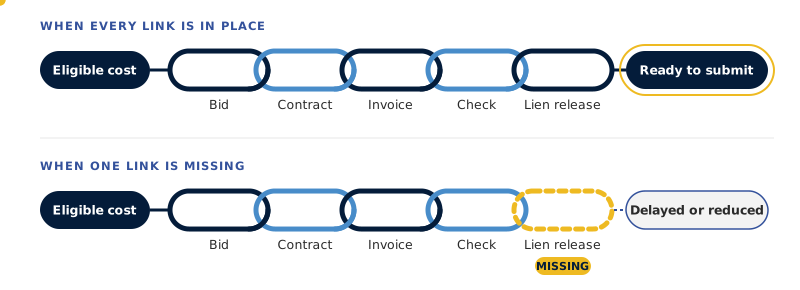
Every reimbursable dollar needs support, and that support may include bids, contracts, change orders, invoices, checks, lien releases, certified payrolls, as-builts, acceptance letters, and other required backup. When those materials are not collected and organized throughout the project, teams may later struggle to recreate the documentation trail. Some requirements, such as public bidding procedures, also need attention before contracts are awarded rather than after the work is done.
Late Documentation Creates Avoidable Risk
When documentation is left until late in the project, avoidable risk builds quickly. Contractors may be harder to reach, internal staff may have changed, and important emails may be buried. Payment records may not be clearly tied to the correct contract or improvement, and reviewers may raise questions that could have been addressed much earlier. Each of these gaps can slow the review of a reimbursement request and delay the return of district bond proceeds to the project.
How LRS Keeps Documentation on Track
The Launch Reimbursement System™ (the LRS) helps developers stay ahead of the process by tracking eligible costs, organizing required backup, identifying missing items, and preparing reimbursement submittals with documentation discipline built in from the beginning. When documentation is missing or incomplete, Launch flags it early so it can be resolved before the reimbursement binder is submitted. Launch also provides management reporting on costs submitted, costs reimbursed, and remaining bond proceeds. Learn more about how the LRS works.
The earlier the reimbursement process is organized, the easier it is to protect eligibility, reduce delays, and maintain visibility.
The earlier the reimbursement process is organized, the easier it is to protect eligibility, reduce delays, and maintain visibility. Reimbursement is not a final step that follows construction, but a process that should run alongside development activity from the first eligible cost. For more on where reimbursement requests tend to break down, see our article on common reimbursement mistakes.
Start the reimbursement process before your documentation becomes difficult to reconstruct. Contact Curry Froelich at curryf@launch-dfa.com to discuss your project’s reimbursement needs and how the LRS can help you put a clear documentation plan in place.